Matching suits are a familiar wedding tradition, but identical outfits are not the only route to a polished wedding party. Mismatched groomsmen suits can feel personal, accommodate different budgets and look excellent in photographs. The secret is to make the differences deliberate. Without a shared plan, even expensive suits can look as though everyone dressed for a different occasion.
Think of the group as a coordinated collection, not a uniform. Decide what connects the outfits first; then allow individual choices within those boundaries.
Choose What Will Stay Consistent
Start with one or two shared elements: a colour family, similar fabrics, the same level of formality or consistent shirts and ties. The more adventurous the suit colours, the more useful a simple unifying detail becomes. If the suits are already close in shade, accessories can vary a little more.
The venue and dress code set important limits. Different blues can look excellent at a country-house wedding, while a traditional formal ceremony may call for a quieter palette. Black tie is a specific eveningwear dress code, so ordinary lounge suits should not be mixed with dinner suits when black tie is requested.
Build a Palette That Looks Intentional
Work within a colour family
Different colour groomsmen suits often look best when the shades share an undertone. Navy, slate and medium blue make a cool palette. Stone, taupe and warm brown produce a softer, earthy look. Charcoal and mid-grey can feel particularly appropriate for a formal urban wedding.
Simply telling everyone to find “a blue suit” is risky. One suit may lean towards teal, another towards purple and another towards almost-black. Ask for daylight photographs or fabric swatches before approving purchases. Two different shades that look harmonious together are better than five supposed matches that visibly clash.
Repeat colours instead of using every shade once
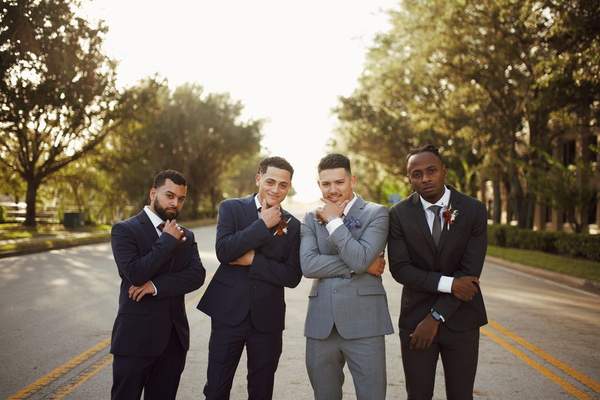
For four groomsmen, try two navy suits, one slate blue and one medium grey. The repeated navy anchors the group, and matching shirt colours create an obvious visual connection. Another option is three earth tones with accessories in one muted accent colour.
Consider the bridesmaids’ outfits, flowers and surroundings, but avoid matching each tie precisely to a dress. The goal is complementary wedding party style, not a colour-coded chart.
Match Fabric Weight and Formality
Fabric matters just as much as colour when planning mix and match groomsmen suits. A shiny lightweight suit alongside heavy textured flannel can seem disconnected. Similar levels of sheen, texture and structure help the overall group feel coordinated.
For summer ceremonies, breathable wool or linen blends may suit the weather, although linen naturally creases. Wool suits and restrained textures often work well in cooler months. A group does not need identical cloth, but wildly different finishes tend to draw attention for the wrong reasons.
Keep the dressiness comparable too. A crisp three-piece suit may overpower an unstructured jacket worn with chinos. Agree in advance whether everyone will wear a complete suit, whether waistcoats are optional and how formal the footwear should be.
Let People Choose Flattering Fits
Coordinated suits do not require identical cuts. One groomsman might prefer a tailored fit, another a classic regular fit. Both can look polished when the shoulders fit properly, sleeves sit neatly and trousers are the right length.
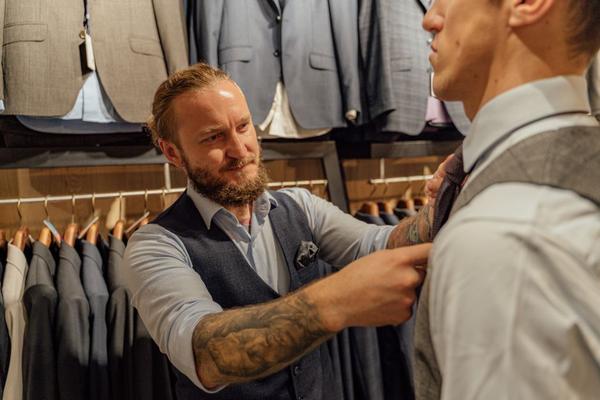
Encourage fittings or alterations well before the day, especially for anyone wearing an older suit. Good tailoring usually makes a bigger difference than buying another accessory. A guide to choosing the right groom’s suit can help establish the overall level of structure.
Help the Groom Stand Out
The groom should be recognisable without looking unrelated to his friends. He might wear a deeper navy three-piece suit while the groomsmen wear blues and greys, or choose a distinctive tie or buttonhole within the shared palette.
Avoid changing every detail at once. A different suit shade, waistcoat, tie and shoe colour can make the groom look as though he belongs to another group. One or two deliberate distinctions are usually enough.
Use Accessories as the Connecting Thread
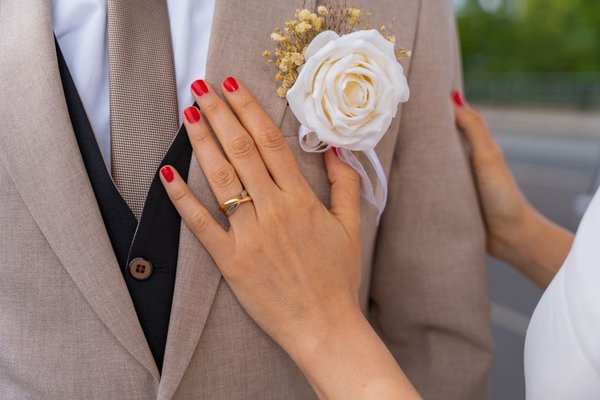
White or pale blue shirts provide an easy foundation. Matching ties are one option, but ties in related muted shades can feel less rigid. Pocket squares and buttonholes should complement rather than compete, particularly when the floral arrangements already provide colour.
Agree on broadly similar shoe formality and leather finishes. Dark brown often works with navy and lighter greys; black is a classic choice with charcoal and darker formal outfits. Identical brands are unnecessary, but a mixture of polished Oxfords and casual trainers may look accidental.
For finishing details, explore wedding tie colour combinations and ways to coordinate wedding flowers with menswear. Accessories should connect the outfits, not become the main event.
How This Works at a UK Country Wedding
Imagine a late-spring ceremony at a converted barn in the Cotswolds. The groom wears dark navy. Four groomsmen choose navy, slate blue and medium grey suits, all with white shirts, muted sage ties and similarly formal leather shoes. Their suits are different, yet the repetition makes the group look considered.
Now imagine someone arriving in a shiny black suit with a bright patterned tie. That outfit is not inherently wrong, but it breaks the agreed visual language. Sending a few approved examples beforehand avoids difficult conversations on the wedding morning.
British weather is worth considering as well. View fabric colours in overcast daylight and under indoor lighting. Pale suits may appear noticeably brighter than navy when the group is photographed together.
Keep the Planning Simple and Fair
Send each groomsman a concise brief covering approved colours, fabric guidance, formality, shirt colour, accessories, shoes and a decision deadline. Request a full-length photograph of the actual outfit rather than only a retailer’s product image. Leave time for returns and alterations.
Discuss costs early. Mismatched suits can save money if groomsmen already own appropriate outfits, but a narrowly specified palette might force unnecessary purchases. Make room for realistic budgets without compromising the agreed dress code.
Before the wedding, review the outfits together for clashing waistcoats, unexpectedly bright ties or noticeably different footwear. Small issues are easier to fix than an unsuitable suit discovered on the day.
Frequently Asked Questions
Can groomsmen wear completely different suit colours?
Yes, as long as the colours complement one another and another element, such as formality or shirt colour, connects the outfits. A curated palette is safer than unrestricted choice.
Do mismatched groomsmen need matching ties?
No. Matching ties offer easy consistency, but related colours or subtle coordinated patterns can work equally well. Keep the other accessories restrained.
Can groomsmen wear suits they already own?
Absolutely, provided the suits fit well, meet the dress code and sit comfortably within the approved palette. Check each outfit before the wedding.
Should the groom wear a completely different colour?
Not necessarily. He can stay within the same colour family and stand out through a different shade, waistcoat, tie or buttonhole.
A Cohesive Finish
Successful mismatched groomsmen suits look effortless because the choices behind them are thoughtful. Keep the palette controlled, respect the formality of the occasion and repeat just enough detail to tie everyone together. Personal style can then shine without making the wedding party look random.