The groom’s suit can be bought months before the wedding and still feel wrong a week before it. Sleeves that looked fine in the shop may cover your shirt cuffs, or trousers hemmed without your wedding shoes may end up too short. A realistic groom suit alterations timeline prevents those surprises by separating the first assessment, the tailoring, and the final check.
For most ready-to-wear suits, aim to have the suit in hand and your first alteration appointment booked about six to eight weeks before the ceremony. That is a planning buffer, not a universal rule. Your schedule depends on the tailor’s workload, the changes required, and whether the suit is ready-made or custom.
The groom suit alterations timeline at a glance
A practical suit alteration schedule looks like this: ten to twelve weeks out, confirm the suit and book a tailor; six to eight weeks out, attend the first fitting; four to five weeks out, review completed alterations; two to three weeks out, have the final suit fitting; and approximately one week out, collect and inspect everything. Simple jobs may require fewer appointments.
Routine alterations often take around one to two weeks, but complex work or peak wedding-season demand can take longer. Ask for actual appointment and collection dates. For a made-to-measure or bespoke outfit, begin earlier and follow the maker’s construction schedule before planning alterations.
10–12 weeks before: secure the suit and the tailor
Start with the garment itself. Check that the jacket sits correctly across your shoulders and closes without severe pulling. A tailor can usually adjust sleeve length, trouser hems, and some waist shaping, but rebuilding shoulders is difficult, costly, and sometimes impractical. If major structural changes are needed, exchanging the suit for a better size may be wiser.
Contact the alteration shop early. Explain that the suit is for a wedding, describe likely changes, and ask how many wedding suit fittings they expect. Confirm whether the turnaround includes a follow-up appointment and rework. If you have a waistcoat, include it in the plan now rather than treating it as an afterthought.
If you are still choosing between styles, decide on a wedding suit or tuxedo before paying for alterations. Changing outfits after tailoring begins could reset the fitting process.
6–8 weeks before: attend the first fitting
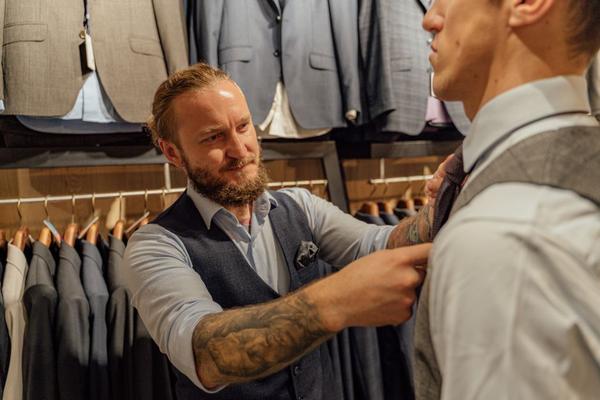
This is the most important appointment in the groom tailoring timeline. Wear the dress shirt, shoes, and belt or suspenders you plan to use on the wedding day. A different heel or waistband position changes how trousers hang, while a different shirt affects visible cuff length.
Stand naturally while the tailor checks the jacket’s collar, chest, waist, sleeves, and balance. Then sit, walk, and button the jacket. The outfit should look sharp without restricting movement during the ceremony or meal. Judge trouser length while wearing your actual shoes, not barefoot.
Ask which changes are straightforward and which involve risk. Agree on the silhouette, cost, and next appointment before leaving. Understanding how a suit jacket should fit can also help you distinguish an unsuitable cut from a fixable measurement.
4–5 weeks before: review the alterations
At the second appointment, the suit should be close to its finished shape. Check more than the front mirror view. Does the collar lie flat? Does the jacket hang evenly from behind? Do the trouser legs fall cleanly over your shoes? Sit down to confirm that the waistband remains comfortable.
Imagine a groom who had his trousers hemmed in trainers but later tries them with lower-heeled wedding loafers. The fabric may now bunch differently at the ankle. Bringing the real shoes to this appointment allows the tailor to correct the hem with time to spare. Testing the complete outfit matters more than chasing a measurement on paper.
2–3 weeks before: book the final suit fitting
By the final suit fitting, the goal is confirmation, not a fresh redesign. Wear the complete outfit, including your shirt, waistcoat if applicable, and wedding shoes. Check cuff exposure, jacket closure, trouser break, and ease of movement. Take photographs from the front, side, and back; subtle pulling is sometimes easier to spot in pictures.
If something still needs correction, identify the issue and ask whether the tailor can finish it before collection. Never assume same-day or rush services are available. Leave a buffer for minor rework rather than discovering a problem the night before the wedding.
About one week before: collect and inspect everything
Try the suit on when you collect it, even if the last fitting went smoothly. Confirm that every adjustment is complete, the correct trousers and waistcoat are included, and there are no marks, loose threads, or damaged buttons. Ask how to press or steam the fabric safely.
Hang the outfit properly and keep the accessories together. If you are travelling for the wedding, collect it before departure and use an appropriate garment bag. Your matching wedding shoes should already have been checked with the finished trousers.
What if your size changes or you start late?
Tell the tailor promptly if your measurements change. Minor waist adjustments may be possible, but available seam allowance and garment construction set limits. Avoid trying to change your body quickly just to fit a suit; the garment should fit you.
With only two or three weeks left, take the complete outfit to a tailor immediately for an honest assessment. Prioritise manageable fixes such as hems and sleeve length. Major shoulder or chest problems might call for a replacement rather than risky reconstruction. Confirm the pickup date and preserve time for a try-on.
Frequently asked questions
How many fittings does a groom usually need?
A straightforward ready-to-wear suit may need an initial fitting and one final check. Combined jacket and trouser shaping, a waistcoat, or further refinements can require an additional appointment. The garment and alterations determine the number, not a fixed rule.
Is two weeks enough for wedding suit alterations?
Sometimes, if the work is simple and the tailor has availability. Many routine alterations take about one to two weeks, but that leaves little room for delays or corrections. Confirm the exact work and completion date before committing.
Should I wear my wedding shoes to every fitting?
Yes, particularly when the trouser length is pinned or checked. Bring your intended shirt and belt or suspenders too, so the tailor can judge the outfit at the height and waist position you will wear.
When should I book alterations for a made-to-measure suit?
Follow the supplier’s fitting and delivery timetable. Order well ahead of the ceremony, then reserve a final check around the garment’s expected arrival. Production times vary, so do not assume a ready-to-wear timeline applies.
Give the final fitting room to breathe
A good wedding suit depends on getting the foundation right, checking the complete outfit with the correct accessories, and leaving time for refinements. Book early, confirm each appointment, and treat the last two weeks as a buffer rather than the start of your tailoring journey. Then you can focus on the wedding, not a rushed trip to the tailor.