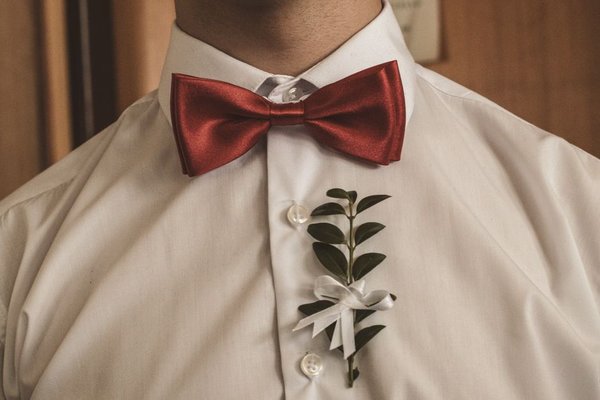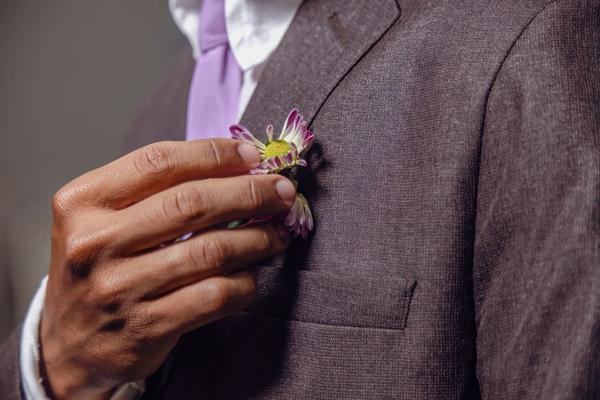
A groom’s buttonhole is one of the smallest details in a wedding outfit, yet it sits exactly where photographs draw the eye: beside the face, tie and jacket lapel. A flower that is too large, badly placed or competing with a pocket square can make an otherwise sharp suit look unsettled. Getting groom boutonniere and suit styling right means giving each detail its own space.
In the UK, buttonhole and boutonniere are often used interchangeably. Both describe a small floral arrangement worn on a jacket lapel. The best choice complements the suit, connects subtly with the wedding flowers and remains comfortable throughout the day.
Where should the groom’s boutonniere sit?
The traditional position is the wearer’s left lapel, above the breast pocket and close to the lapel buttonhole. When facing the groom, that is the side on your right. Place the flower head upright on the broader part of the lapel, with its wrapped stem pointing down and following the jacket’s line.
There is no universal distance from the collar because lapel shapes vary. The flower should look attached to the lapel rather than floating across the chest. It should not be pushed into the breast pocket, nor should its stem cover the pocket square.
How to secure it without a visible pin
Put the jacket on and check the boutonniere placement in a mirror. Ask someone to hold the arrangement against the lapel and secure it from behind. With a conventional floral pin, carefully pass the pin through the underside of the lapel, through the firm wrapped stem near the flower head and back into the fabric. The point must finish safely concealed.
Some tailored jackets have a working lapel buttonhole and a small loop beneath to hold a flower stem. Use these if suitable. For velvet, fine fabrics or hired suits, consult the tailor or florist before piercing the cloth. Magnetic fastenings may suit lightweight flowers but can slip with heavier designs and require caution around implanted medical devices.
Match the flower to the suit, not just the bouquet
A floral connection with the ceremony is lovely, but a groom buttonhole must also work against the colour and texture of his jacket. Take a daylight photograph of the actual suit when discussing flowers with the florist.
For navy tailoring, ivory, soft blush or muted greenery can provide clean contrast. Charcoal and black suits often look polished with a white or cream bloom. Beige, stone and light-grey suits suit warmer colours such as dusty peach or muted rust, particularly at summer weddings. A small burgundy flower can also work on navy if the tie and other accessories remain quiet.
Choose a scale that suits the lapel
A wide peak lapel can accommodate a fuller arrangement, while a narrow notch lapel usually looks better with one modest bloom and a short stem. Avoid heavy bunches that pull the cloth forward or cover the lapel notch. With a double-breasted jacket, check the position while it is buttoned. Formal eveningwear generally benefits from a compact design.
How to wear a buttonhole and pocket square together
The buttonhole belongs on the lapel; the pocket square belongs in the breast pocket, generally on the same left side. Their proximity is why styling can become crowded. Treat them as different textures contributing to one composition, not two competing statements.
Let one accessory carry the strongest colour or pattern. If the flower is vibrant, choose a simple white or softly coloured pocket square. If the square has a bold paisley print, select a quieter bloom or foliage-led buttonhole. Repeating a colour family is often smarter than using identical shades.
Imagine a navy three-piece suit with a sage-green tie and ivory shirt. A small cream rose with eucalyptus picks up the softer colours; a white linen pocket square in a straight fold keeps the chest crisp. Replacing that square with a large green floral puff would make the tie, square and buttonhole compete for attention.
Leave a clear gap between flower and square. If they overlap in photographs, reduce the square’s height or ask for a shorter floral stem rather than shifting the boutonniere to the other lapel.
Coordinate the tie, waistcoat and accessories
Look at the groom’s outfit from top to bottom before choosing a flower. The tie or bow tie makes the largest colour statement near the face; the buttonhole provides a smaller accent. A shiny satin tie alongside a glossy ribbon-wrapped stem may feel busy, while discreet floral tape provides a cleaner finish.
If the waistcoat is patterned, simplify the flower. Cufflinks and tie clips do not have to match it, but ornate metalwork next to a large boutonniere can clutter the look. For broader planning, compare wedding suit colour combinations and matching ties with shirts before selecting accessories.
Should the groom’s flower match the groomsmen’s?
Coordination usually looks better than duplication. Groomsmen can wear smaller arrangements using similar foliage or colours. The groom might have one additional bloom or a subtle reference to the partner’s bouquet. A guide to coordinating groomsmen outfits can help keep the party cohesive.
Ask the florist to label each arrangement and supply fastenings. Nominate one person to attach the flowers so heights and angles look consistent in group portraits.
Keep the buttonhole fresh all day
Fresh flowers are delicate, especially during warm summer ceremonies. Discuss resilient varieties with the florist, follow their storage advice and attach the buttonhole after dressing. Avoid crushing petals while fastening a seat belt or hugging guests.
Before leaving, photograph the groom standing naturally with his jacket buttoned. Check that the bloom faces forwards, the pin is hidden, the lapel lies flat and the pocket square remains visible. This one-minute test is more revealing than assessing the flower on a hanger.
For a long celebration, ask whether a spare buttonhole or sturdier floral design makes sense. Delicate blooms may struggle through outdoor photographs and an evening of dancing.
Frequently asked questions
Which side does a groom’s buttonhole go on in the UK?
Traditionally, it goes on the groom’s left lapel, near the lapel buttonhole and above the breast pocket. The flower faces upwards and its stem points down.
Can a groom wear both a boutonniere and a pocket square?
Yes. Keep the flower on the lapel and the square in the breast pocket. Choose complementary colours and avoid oversized designs that visually merge.
Does the buttonhole have to match the bride’s bouquet?
No. Repeating a flower, foliage type or colour can create a thoughtful connection, but the design should also suit the jacket and accessories.
When should the groom put on his boutonniere?
Attach it after dressing and shortly before photographs or the ceremony, following the florist’s care advice. This helps protect fresh petals.
A finishing touch that feels intentional
Successful groom boutonniere and suit styling relies on proportion, placement and restraint. Start with the left lapel, choose a bloom that works with the actual suit, then balance the tie and pocket square around it. When every element has a clear role, the flower becomes a personal finishing touch rather than a last-minute addition.