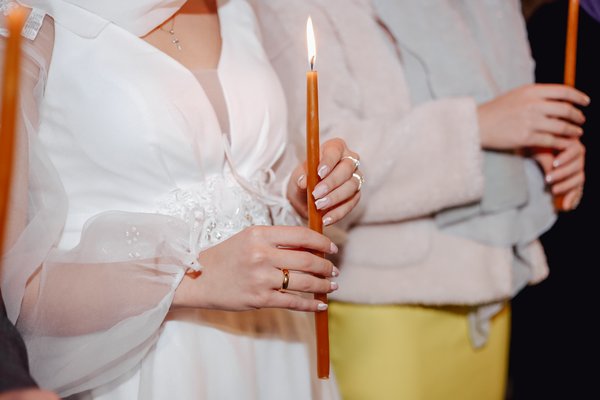
A candle lighting wedding ceremony can create one of the quietest, most memorable moments of the day. Two people bring separate flames together to light a central candle, marking the start of their marriage. The idea is simple, but getting it right involves more than buying three attractive candles. Your ceremony venue, the person leading the service and even a draught through an open doorway can shape what is possible.
For couples planning a UK wedding, the best approach is to settle the practical arrangements first, then choose wording that feels personal rather than overly formal.
What Does Lighting a Unity Candle Symbolise?
In a traditional unity candle ceremony, each partner takes a smaller lit candle and uses it to light one larger candle. The two flames represent their individual lives; the shared flame represents the partnership they are creating. It is a symbolic wedding ritual, not a legal requirement for marriage.
When Should the Candle Ceremony Happen?
The most natural place is usually after the exchange of vows or rings, when guests have heard the commitment and can now see it represented. In a celebrant-led ceremony, it can also provide a gentle pause before the closing words. Allow roughly two or three minutes, depending on the reading, music and movement involved.
For a legal civil ceremony, agree the sequence with the registrar in advance rather than assuming you can insert an extra ritual. If the official service is too restricted or short, the candle lighting can happen during a separate, non-legal celebration immediately afterwards.
Setting Up the Candles Without Awkward Pauses
Choose a stable, accessible arrangement
You normally need one central pillar candle, two smaller taper or pillar candles, suitable holders and a reliable way to light them. Place everything on a level, heat-resistant surface at a comfortable height. Leave enough room for both partners to approach without crossing trailing outfits, floral displays or microphone cables.
Ask a coordinator to check the setup beforehand and arrange for the smaller candles to be lit discreetly just before the ritual. If you want parents or other relatives to light the side candles, rehearse where everyone will stand and how they will return to their seats.
Plan for the photography as well as the flame
A small table to one side of the ceremony space often works better than placing candles directly in front of the officiant. It gives the photographer a clear angle and keeps the couple from turning their backs on guests for too long. Practise lifting and lowering the candles together, especially if the central wick is recessed.
Example Candle Ceremony Scripts
Classic and understated
“These two lights represent the lives that have brought you to this moment. As you light this candle together, may it remind you of the home, kindness and commitment you will build side by side. Your light is shared, while each of you remains uniquely yourself.”
Warm and modern
“A marriage does not mean two people become the same person. It means choosing, again and again, to face life together. As you combine these flames, let this light stand for the care, laughter and steady support you promise one another.”
Including family
“The two candles were lit by the people who have supported you along the way. From those beginnings, you now light a new candle together. May it honour the love that surrounds you and the family you are creating in your own way.”
Keep a candle ceremony script short enough that guests can follow the action. You might add ten seconds of instrumental music, but a lengthy reading can make the couple stand holding burning candles while waiting for their cue.
What UK Venues and Registrars May Allow
Always ask the venue about naked flames before purchasing candles. Some historic buildings, hotels and marquees prohibit them or allow them only under specified conditions. A glass hurricane cover may reduce draughts, but it does not override a no-flame rule. Never position a flame near fabric, foliage or children, and designate someone to extinguish it safely afterwards.
In England and Wales, civil ceremonies must be non-religious, and additional wording and arrangements need to be discussed with the registrar. Scotland has different marriage arrangements, including authorised religious or belief celebrants; Northern Ireland has its own registrar requirements. Check the rules for your actual ceremony type and location rather than relying on advice meant for another part of the UK.
A realistic outdoor wedding example
Imagine a garden ceremony at an approved country-house venue in England. The couple wants to light a candle beneath an open-sided canopy. The garden location may be suitable for the legal ceremony, but that does not mean the venue permits flames. Their sensible plan is to ask the venue and registrar separately, check the wind exposure and rehearse the ritual indoors as a wet-weather backup. If flames are refused, they can still speak the same words while switching on a central battery-powered candle together.
Alternatives When Open Flames Are Not Permitted
Flameless LED candles can preserve the visual idea of two lights becoming one. Test the switches in advance, since some models are awkward to operate in front of guests. Another option is to invite the couple to place two coloured glass pieces into a single keepsake vessel. A handfasting, sand ceremony or shared planting ritual can convey unity without any flame at all.
The alternative should suit the space. Loose sand is not ideal in strong wind, for example, while a planting ritual can be messy in formal clothes. For more ways to personalise the day, consider your wedding ceremony order, wedding readings and other unity ceremony ideas when planning the programme.
Frequently Asked Questions
Is a unity candle ceremony religious?
Not necessarily. Many couples use entirely secular words about commitment and partnership, although candles also appear in religious traditions. If you are marrying in a civil ceremony, have your wording approved beforehand and avoid religious content where it is prohibited.
Who lights the two smaller candles?
The partners can light them themselves, or parents and other loved ones can do so as a family gesture. It is also fine to have the candles lit before guests arrive, leaving only the central candle for the couple.
Can we have a candle lighting ceremony outdoors?
Possibly, but permission and practicality are separate questions. Ask the venue about its fire policy, check any registrar requirements and prepare a flameless backup for wind or bad weather.
Do we have to blow out the individual candles?
No. Leaving them alight can symbolise two individuals retaining their identities. Extinguishing them offers a different meaning. Either choice works if your officiant explains it clearly and the venue permits the arrangement.
A Small Ritual Worth Planning Carefully
The most meaningful candle lighting wedding ceremony is not necessarily the most elaborate. A secure setup, a few sincere lines and a clear cue for the couple are enough to make it feel intentional. Confirm permissions early, practise the movement once and choose a flame-free version if the setting calls for it. Guests will remember the promise behind the light, not the equipment used to create it.