Choosing between a tuxedo and a suit is less about which one looks “more wedding” and more about matching your outfit to the formality, time and setting of the day. The right choice depends on whether you are planning a formal evening celebration, a relaxed country wedding, a city ceremony or something in between.
A tuxedo, usually called a dinner jacket in the UK, creates a sharper evening look with traditional black-tie details. A groom suit is more flexible: it can be formal, contemporary, seasonal or relaxed depending on the cloth, colour and styling. Before buying or hiring anything, decide what level of formality you want the wedding to communicate.
What is the main difference between a tuxedo and a suit?
Traditional tuxedos use contrasting silk or satin on the lapels, often with covered buttons, while the trousers commonly have a braid or satin stripe down the outer seam. They are normally worn with a white evening shirt, black bow tie and polished black shoes. In British dress-code language, this is black tie.
A standard suit usually uses the same cloth throughout the jacket and trousers, without satin lapels or trouser stripes. It can be worn with a long tie, bow tie or, at a less formal wedding, an open collar. Navy, charcoal, grey and lighter seasonal shades give a suit more styling range.
When a wedding tuxedo makes the most sense
A wedding tuxedo is the strongest choice when the celebration is deliberately formal and evening-focused. If you are hosting a black tie wedding, the groom should dress consistently with that code rather than wearing an ordinary business-style suit while asking guests to wear dinner jackets.
Tuxedos also suit grand hotels, historic venues and elegant city spaces. Imagine a 5pm ceremony in a London hotel followed by dinner and dancing. A black or midnight-blue dinner jacket, white shirt, black bow tie and polished shoes would fit naturally. In that setting, a light lounge suit could feel underdressed.
When a groom suit is the better option
A suit is usually the more adaptable choice for daytime ceremonies, rustic venues, summer weddings and celebrations where the atmosphere is smart rather than strictly formal. It can still look distinctive enough for the groom when the fit, cloth and accessories are chosen carefully.
A navy or charcoal suit works well for a church or registry-office ceremony. Lighter beige, stone or pale grey can suit warm-weather weddings, while textured wool or deeper colours suit autumn and winter. A suit also offers better reuse after the wedding.
Think about the time of day
Traditional black tie is evening dress, so a tuxedo naturally feels most at home later in the day. British wedding conventions are flexible, but timing still affects how an outfit reads. A tuxedo at a midday garden ceremony can appear heavier and more formal than the surroundings, especially in warm weather.
If your ceremony starts in the afternoon but the reception becomes more formal after dark, you can wear a polished suit throughout or change into a dinner jacket for the evening.
Match the outfit to the venue and dress code
The invitation and venue should tell the same story. A black tie dress code calls for proper evening formalwear, while “formal”, “cocktail” or “smart” usually leaves more room for a suit. In the UK, morning dress is also a separate formal daytime tradition, so a very traditional wedding may call for a morning coat rather than either a tuxedo or an ordinary lounge suit.
Look at the complete guest experience. A stately-home dinner with candles, live music and evening dancing supports a tuxedo. A barn wedding with an outdoor ceremony and relaxed dinner is usually better matched by a well-cut suit. Thinking about wedding dress codes as a whole also helps the groom, groomsmen and guests feel coordinated.
Which option works better for the groomsmen?
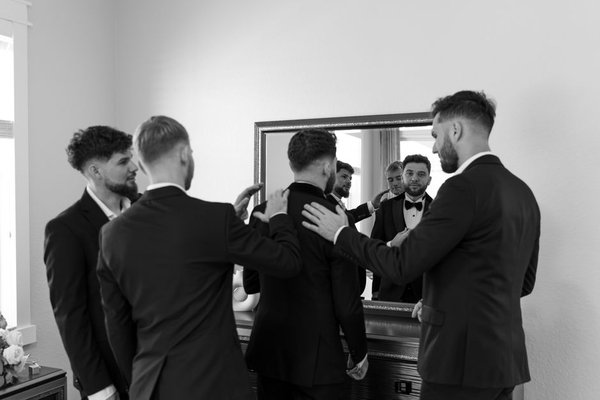
You do not have to dress the groom and groomsmen in exactly the same outfit. With black tie, consistency is easy because the dress code already sets clear expectations. The groom can stand out through lapel style, boutonnière, waistcoat choice or a subtly different dinner jacket.
With suits, you have more freedom. The groom might wear a three-piece navy suit while the groomsmen wear matching two-piece suits, or everyone can share the same suit with different ties or waistcoats. The key is intentional coordination rather than small differences that look accidental.
Cost, hiring and how often you will wear it again
Budget matters, but purchase price alone should not decide the choice. A tuxedo may have fewer opportunities for reuse unless you regularly attend black-tie events. Hiring can therefore make sense, especially if several groomsmen need coordinated wedding formalwear.
A good suit is often easier to justify as a purchase because it can be worn to future weddings, dinners, work events and formal occasions. If you already own a well-fitting dark suit, tailoring and better accessories may produce a stronger result than buying inexpensive formalwear simply because it is new.
Whatever you choose, prioritise fit. Sleeve length, trouser break, jacket waist and shoulder shape matter more than the label inside the jacket. Allow time for alterations.
Tuxedo vs suit: a simple decision rule
Choose a tuxedo if your wedding is explicitly black tie, strongly evening-led or designed around a high level of formality. Choose a suit if you want versatility, daytime suitability, more colour options or an outfit you can easily wear again.
If both seem possible, ask one question: would a guest arriving in a classic black dinner jacket look perfectly in place? If yes, a tuxedo is a strong choice. If it would seem noticeably more formal than the venue, décor and wedding party, a suit will probably feel more natural.
Frequently asked questions
Can a groom wear a suit to a formal wedding?
Yes, provided the wedding is formal rather than specifically black tie. A dark, well-tailored suit with a crisp shirt, tie and polished shoes can be entirely appropriate. If the stated dress code is black tie, a dinner jacket is the more correct choice.
Is a tuxedo too formal for a daytime wedding?
Often, yes. Tuxedos are traditionally evening formalwear, so a suit or morning dress is usually a more natural fit for a daytime UK wedding. Modern couples can bend convention, but the outfit should still make sense with the venue and style.
Can the groom wear a tuxedo if the groomsmen wear suits?
Yes. The contrast can work when it is deliberate. Keep the colour palette and accessories connected so the groom looks distinguished rather than disconnected from the wedding party.
Is a tuxedo more expensive than a wedding suit?
Not necessarily. Prices vary widely for both, and hiring changes the comparison. Include alterations, shoes, shirt and accessories in the total cost, then consider how often you are likely to wear the outfit again.
Final choice
There is no universal winner. A tuxedo brings unmistakable evening formality; a suit offers broader styling freedom and greater reuse. Match the outfit to the dress code, ceremony time, venue and atmosphere, then invest in proper fit. When those elements agree, the groom will look appropriately dressed rather than simply dressed up.