Choosing between diamond shapes for engagement rings is about more than deciding which outline looks prettiest. Shape changes the way a diamond handles light, how large it appears on the finger, how it pairs with different settings and, in many cases, how far a budget can stretch. Two diamonds with the same carat weight can look noticeably different once one is round and the other is elongated.
It also helps to separate shape from cut quality. Shape describes the face-up outline, such as round, oval, emerald or pear. Cut quality describes how well facets, proportions, polish and symmetry work together. GIA currently gives an overall cut grade to standard round brilliant diamonds in the D-to-Z colour range, while fancy shapes are assessed differently. That makes side-by-side viewing especially useful when comparing non-round stones.
Round: the classic choice for maximum sparkle
A round diamond engagement ring is the traditional benchmark for brilliance. The round brilliant design is engineered to return a high level of white light, fire and scintillation when it is well cut, so it suits buyers who want unmistakable sparkle and a timeless look.
Round diamonds are also versatile. They work with solitaires, halos, three-stone rings, pavé bands and vintage-inspired settings. The trade-off is price: round stones often cost more per carat than many fancy shapes of comparable colour and clarity, partly because cutting a round brilliant can retain less of the original rough and because demand remains strong.
Best for: someone who prioritises sparkle, classic styling and easy setting options.
Oval: brilliant sparkle with an elongated look
An oval diamond ring keeps much of the lively character associated with brilliant-style faceting while creating a longer silhouette. That stretched outline can make the stone appear larger face-up than a round diamond of similar carat weight, and it can visually lengthen the finger.
Ovals vary more in proportion than rounds. Some are slim and elegant; others are wider and softer. Many oval diamonds also show a bow-tie effect, a darker band across the centre caused by the way light interacts with the facets. A slight bow-tie is common, but a very dark or distracting one is worth avoiding.
Best for: buyers who want strong sparkle with a contemporary, finger-lengthening shape.
Emerald: elegant, architectural and understated
An emerald cut engagement ring has a different personality. Instead of the intense glitter of a brilliant cut, its long step facets create broad flashes of light and a distinctive mirrored effect. The result feels clean, sophisticated and slightly vintage.
Because the large table and open facet pattern reveal the interior of the stone more clearly, inclusions can be easier to notice in an emerald cut. You do not automatically need the highest clarity grade, but visual inspection matters. An eye-clean stone can offer better value than paying for a higher grade that adds cost without a visible benefit.
Emerald cuts suit sleek solitaires, tapered baguette side stones and minimalist settings particularly well.
Best for: someone who prefers refined flashes of light, symmetry and a less conventional alternative to high sparkle.
Pear: distinctive, flattering and full of character
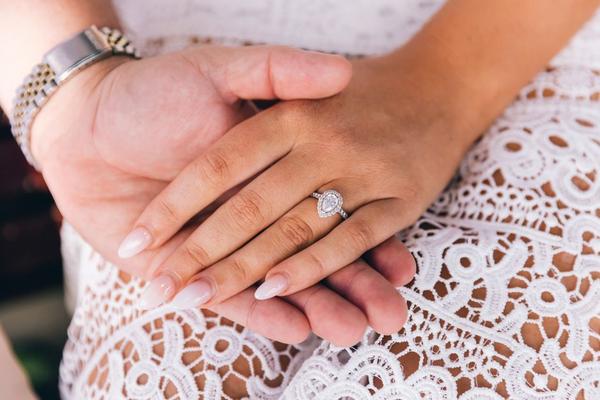
A pear shaped diamond ring combines a rounded end with a tapered point, giving it a graceful teardrop outline. It can feel romantic without being overly traditional, and its elongated shape can create a flattering lengthening effect on the finger.
Like ovals, pears may display a bow-tie effect, so compare stones in normal lighting rather than relying only on a grading report. Symmetry matters too: the shoulders should look balanced and the point should sit neatly in line with the centre of the rounded end.
The pointed tip is the most vulnerable part of the stone and should be protected by an appropriate prong or setting design. Pears can be worn point-up or point-down, adding styling flexibility.
Best for: buyers who want an elegant but individual shape with strong visual presence.
How shape affects size appearance and budget
Carat measures weight, not visible size. An elongated oval, pear or marquise may spread that weight across a larger face-up area than a deeper stone, so it can look bigger from the top. That is useful if visual presence matters more than owning a particular carat number.
For example, imagine a couple choosing between a 1.00-carat round and an oval of similar quality. If the oval has attractive proportions and no distracting bow-tie, it may appear larger on the finger while costing less than the round. The better choice is not automatically the cheaper or larger-looking stone; it is the one whose appearance you prefer in real lighting.
Before buying, compare loose diamonds or videos at similar carat weights, then picture them in the intended setting. A halo can make a smaller centre stone look more substantial, while a slim solitaire keeps attention on the diamond itself. Useful next reads include choosing an engagement ring setting, understanding diamond clarity and planning an engagement ring budget.
Which diamond shape suits you?
Start with the feature you care about most. Choose round if sparkle and timelessness lead the list. Consider oval if you want brilliance with a larger-looking, elongated outline. Pick emerald if you love clean lines and broad flashes rather than constant glitter. Look at pear if you want something graceful, distinctive and versatile.
Then factor in lifestyle. Pointed shapes such as pear and marquise need thoughtful protection, while smoother outlines can be easier for everyday wear. Most importantly, judge fancy shapes with your eyes as well as the grading report, because two stones with similar specifications can have noticeably different proportions and light patterns.
Frequently asked questions
Which diamond shape sparkles the most?
A well-cut round brilliant is the standard choice for intense brightness, fire and scintillation. Fancy shapes can also be lively, but their light return varies more with proportions and facet design.
Which diamond shape looks biggest for its carat weight?
Elongated shapes such as oval, pear and marquise often look larger face-up than a round diamond of similar weight. Actual dimensions still matter, so compare millimetre measurements rather than relying on carat alone.
Is an emerald cut a good engagement-ring choice?
Yes, especially if you prefer elegant geometry and broad flashes of light. Because inclusions can be easier to see through its open step facets, inspect the stone carefully and prioritise an eye-clean appearance.
Do fancy-shaped diamonds receive a GIA cut grade?
GIA gives an overall cut grade to qualifying standard round brilliant diamonds, not to fancy shapes such as oval, pear and emerald. For fancy shapes, review polish, symmetry, proportions and the diamond’s appearance in motion.
Choose the shape before chasing the numbers
The best diamond shape is the one that creates the look you want every time you glance at the ring. Shape influences sparkle, visual size, setting choice and price, so it deserves to be decided before obsessing over tiny differences in colour or clarity grades. Compare a few shapes at similar budgets, view them from several angles and pay attention to what draws your eye first. The right choice should feel visually convincing, not simply impressive on paper.